





Digital cards in omnichannel strategy
Get your own communication channel, connect online and offline data, and be within reach of your customers
-
 9. 7. 2026
-
 8 minutes to read

Own communication channel
Independence from algorithms and rising paid advertising costs.
Online and offline connection
Collection of first-party data and customer identification at the point of sale.
Real-time notifications
Directly on the lock screen, without needing to open an email
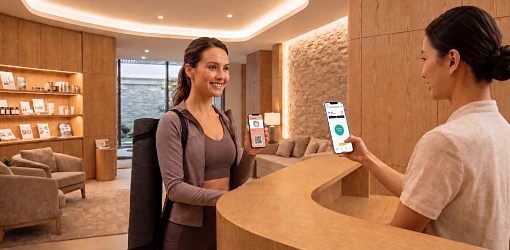
Using digital cards for Apple Wallet and Google Wallet mobile wallets allows for connecting online and offline data, reducing reliance on paid advertising, and communicating directly with customers on their phone screens.
Key benefits for an omnichannel strategy
- Owned media without algorithms: A direct communication channel independent of advertising auctions and social media changes.
- First-party data collection: Reliable customer identification at the point of sale and matching offline purchases with CRM client profiles.
- Retention at zero marginal cost: Lock screen notifications based on location (geofencing) or purchasing behavior.
- Low barrier to entry: Higher adoption rate compared to traditional mobile apps and minimal development costs.
- Always up-to-date content: No need to issue a new card, e.g., when changing colors. Points, coupons, membership tiers, or other information are updated automatically, and the customer always sees their status.
The importance of omnichannel strategy for customer cxperience
An omnichannel strategy integrates all sales and communication channels into a single, cohesive system. Customers expect consistent information and UX, regardless of whether they shop on the e-shop, in an app, or at a physical store.
The goal is to eliminate unnecessary steps in the customer journey. An example is registering for a loyalty program on the web, downloading a digital card to a phone, using it at the store, and then receiving a personalized offer. The entire process takes place in one place. Furthermore, a deep link can connect the card to a mobile app and encourage users to download it. Thus, cards and apps do not compete but complement each other.
Rising acquisition costs and limitations of traditional channels
Capturing customer attention through mass newsletters or paid campaigns is becoming increasingly difficult due to rising costs. The effectiveness of performance marketing is currently influenced by these factors:
- Increasing ad costs on social media: Meta reported in its Q1 2026 earnings a year-over-year increase of 19% in ad impressions and a 12% rise in average ad price.
- Growth in search CPC: According to WordStream's analysis for Google Ads, the average cost per click in search increased by 12% year-over-year to $2.96.
- Decline in organic CTR due to AI: A study by Seer Interactive (tracking 53 brands and 2.43 billion impressions between January 2025 and February 2026) confirms that for queries with Google AI Overview displayed, the click-through rate to organic results decreases by approximately 61%.
In addition, only a portion of customers install a mobile app. A digital card on a phone remains visible even without active distribution and provides a direct connection with the customer.
Digital card as a direct communication channel
After saving the card to Apple or Google Wallet, a direct connection is established between the brand and the user. The company can update card content in real-time, change point balances, and send notifications. The back of the card also provides space for important messages, links, and navigation. Communication can be mass, segmented, or based on GPS location. It is not subject to algorithms or additional costs. The card is right next to payment cards, always visible, and ready for use when paying or visiting a store.
Connecting online and offline environments in practice
The digital card works even without an internet or Wi-Fi connection. It is used for quick user identification at the checkout, with purchase data being immediately reflected in the CRM via API. This way, customer behavior in physical stores can be digitized.
PassMachine client results:
- Notino: The digital loyalty card is the second most common method of customer identification at the point of sale. It is used to promote local promotions. Customers with an active card show a 5% higher conversion rate than those without. More here.
- Běhej lesy: The card replaces paper tickets and is used for quick distribution of race numbers. It allows organizers to communicate with runners in real-time, serves as an information hub, and offers advertising space for race partners. More here.
- s.Oliver: The fashion brand deployed digital promo coupons in its pre-Christmas campaign. The result was a 30% higher average order value (AOV). The coupon motivates registration for the loyalty club and turns a one-time purchase into a long-term contact. More here.
Functional benefits for the marketing mix
- Contextual Push Notifications: Alerts about expiring points, discounts, or club benefits directly on the lock screen.
- Geofencing: Automatic display of the card on the screen if the customer is within a defined radius of the store.
- Dynamic Updates: Points, statuses, and loyalty levels change automatically without needing to change the card itself.
- Targeted Reactivation: The ability to reach out to dormant customers with a specific message (e.g., missing a purchase to earn a reward).
Digital card or mobile app?
A mobile app remains an important part of a digital strategy. However, its development and maintenance represent a significant investment, and many customers simply won't download another app.
A digital card offers instant download, works within mobile wallets pre-installed on phones, and does not require installation from the App Store or Google Play. A digital card is an alternative for scenarios where a customer needs quick access to a loyalty card, membership benefits, a ticket, or coupons.
This does not mean the card replaces the app. Thanks to deep linking, it can serve as a bridge to downloading or regularly opening the app.
Suitable segments for implementation
Digital cards are used by companies across industries today. Key factors are repeat visits and quick identification:
- Retail and E-commerce (loyalty programs, coupons)
- Gastronomy and Hospitality (client clubs, point collection)
- Events and Culture (tickets, season passes, conference IDs)
- Sports and Wellness (membership cards, gym passes)
The common denominator is quick customer identification, offering personalized benefits, and long-term communication with them.
Frequently Asked Questions (FAQ)
How complex is the integration and how quickly can digital cards be launched?
Thanks to the prepared API, technological integration with your existing CRM, CDP (e.g., Bloomreach, Salesforce, Klaviyo, COMARCH), or POS system is a matter of days, not months.
How exactly does the connection of online and offline data work?
The customer presents their digital card on their phone at the physical store checkout. It contains a unique identifier (barcode or QR code). After scanning, information about the offline purchase is immediately matched with their online profile in the CRM via API. This way, you obtain complete first-party data.
What happens if the customer is at the store without signal or Wi-Fi?
Digital cards in Apple Wallet and Google Wallet work 100% offline. They are stored directly in the mobile wallet on the phone, so the customer can open and present the card for identification even in places without mobile signal. Purchase data is sent to the CRM immediately after processing by the checkout.
Does the digital card compete with our own mobile app?
No, the two tools complement each other. A mobile app is typically downloaded only by a core group of the most loyal customers. A digital card has a significantly lower barrier to download and serves as an ideal intermediate step for a broader user base. Furthermore, via a deep link on the card, you can naturally motivate users to download the full app.
What types of digital cards exist?
Digital cards essentially have no limitations. For retail, the most common type is a loyalty card, discount card, or coupon. For gastronomy, wellness, and beauty businesses, stamp cards are typical. However, digital cards can cover all uses from employee and membership cards, to business cards, transit tickets, event tickets, and even flight tickets. More information can be found at passmachine.eu.